
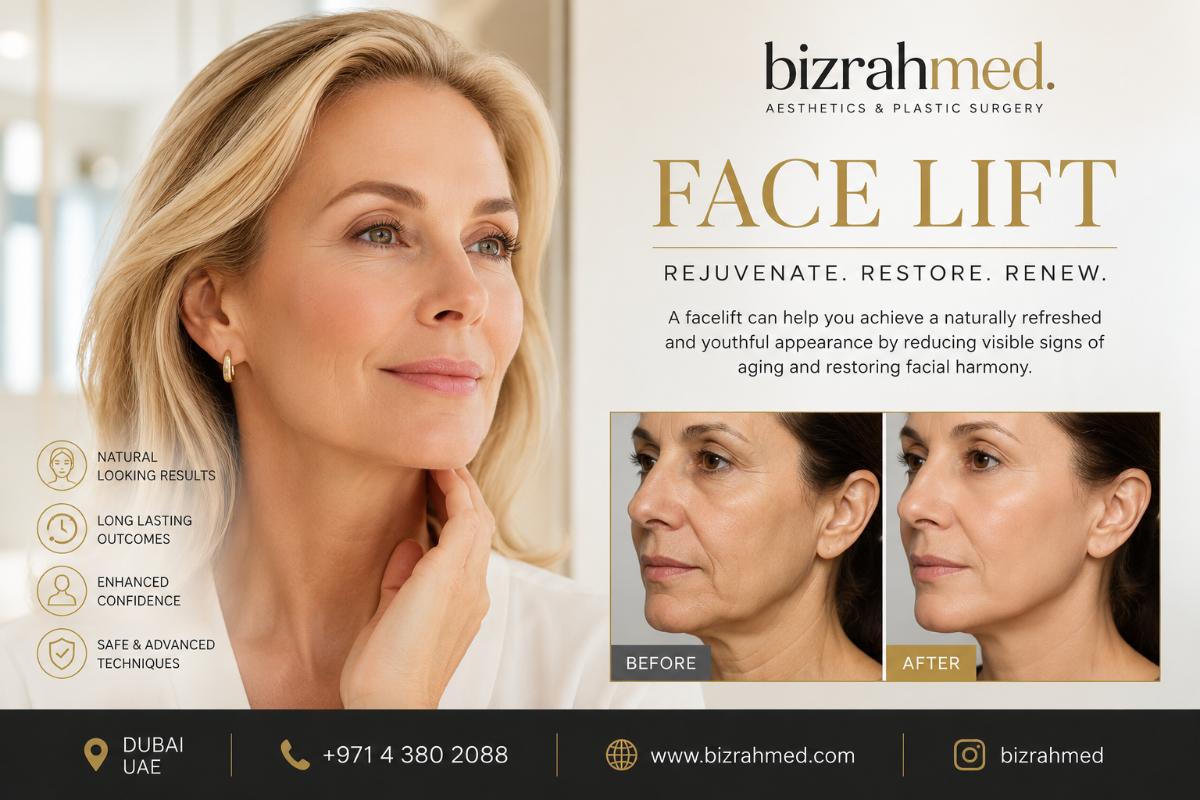
We all have that one photograph. The one where the light catches you just right, where the skin holds its old secret of firmness, and the jawline speaks with the confidence of youth. Then we look in the mirror today. The difference is not a matter of years; it is a matter of narrative. Gravity writes its own story on every face, but the question many are asking is whether that story needs to stay permanent.
Dubai has quietly become a global destination for those seeking a refined approach to facial rejuvenation. The reasons are not mysterious. The city combines world-class medical infrastructure with a philosophy of recovery that prioritizes comfort and privacy. For anyone considering a facelift in Dubai, the journey begins long before the procedure itself.
Why the Body Slows Down
The human face is a complex architecture of skin, muscle, fat, and connective tissue. Over time, collagen production dips, elastin fibers fray, and the once-taut suspension system of the deeper facial layers begins to loosen. This is not a flaw; it is biology. The cheeks descend, jowls form along the jawline, and the neck can develop bands or laxity that no cream or laser can truly address.
A modern facelift does not simply pull the skin tight. That approach has been abandoned by reputable surgeons because it creates an unnatural, windblown appearance. Instead, the contemporary technique repositions the deeper musculoaponeurotic system—the SMAS layer—lifting the underlying support structure so that the skin redrapes naturally from above. The result is a face that looks rested, not stretched.
What the Procedure Actually Involves
The surgery itself is performed under general anesthesia or deep sedation, typically lasting between three to six hours depending on the extent of correction. Incisions are placed with careful intention: starting within the hairline at the temples, curving around the ear, and ending in the natural crease behind the earlobe or within the hairline of the lower scalp.
Through these discreet openings, the surgeon separates the skin from the underlying tissue, tightens the SMAS layer, removes or redistributes excess fat if needed, trims redundant skin, and closes the incisions with fine sutures. Some patients combine the lift with adjunct procedures such as blepharoplasty—eyelid surgery—or a neck lift to create a more harmonious result.
The Recovery Arc
One of the greatest advantages of choosing this path in Dubai is the structured aftercare. The first week involves swelling and some bruising, which is normal and expected. Drainage tubes may be placed temporarily, and a compressive garment is worn to minimize fluid accumulation.
By the end of the second week, most patients feel comfortable moving about in public with light makeup concealing residual discoloration. Strenuous activity and heavy exercise must wait until the fourth week. The final outcome, however, is not immediately visible. True results unfold gradually over three to six months as the tissues settle and any remaining swelling subsides.
Choosing the Surgeon: The Real Decision
The success of this endeavor depends almost entirely on the person holding the scalpel. Board certification, years of specialized experience in facial surgery, and a portfolio of consistent, natural results are non-negotiable. Dubai hosts a number of highly trained surgeons, many of whom have trained internationally and bring a nuanced aesthetic sensibility that respects a patient's unique bone structure and ethnic characteristics.
During a consultation, the surgeon should examine your facial anatomy, discuss your motivations honestly, and set realistic expectations about what can be achieved. If a surgeon promises perfection or refuses to discuss potential complications, it is wise to look elsewhere.
The Emotional Shift
Beyond the physical change, patients often report an unexpected benefit. The subtle correction of tiredness or harshness in the face can shift how they feel internally. They move through life with less self-consciousness about their profile or the loose skin under their chin. It is not about vanity in the superficial sense; it is about alignment. The external image finally matches the internal feeling of vitality.
Of course, this is elective surgery and it carries real risks—hematoma, infection, nerve injury, scarring, and dissatisfaction with results. An honest surgeon will lay these out clearly without minimizing them.