Introduction to Ore
Ore plays a critical role in our industrialized world, serving as a key source of valuable minerals used across various sectors. Ore is defined as a naturally occurring solid material from which a metal or valuable mineral can be extracted profitably. This article aims to provide a detailed examination of ore, its types, methods of extraction, and its economic significance, while also addressing the environmental impact of ore mining.
Definition of Ore and Its Importance
By definition, ore is a type of rock that contains sufficient minerals with economically important elements that can be extracted from the rock. The importance of ore cannot be overstated; it is foundational to modern society as the source of essential materials like metals used in electronics, construction, transportation, and countless other applications. Understanding ore helps in appreciating the economic dynamics and technological advancements in the mining sector.
Types of Ores: A Comprehensive Overview
Ores can broadly be classified into metallic and non-metallic types based on their chemical composition and the minerals they contain. Each type exhibits distinct characteristics and is used in different industrial applications. In general, the extraction of ores contributes significantly to the technological development of industries, making their classification essential for determining mining methods.
Types of Ore
Metallic Ores: Characteristics and Examples
Metallic ores are composed of a valuable metal that can be extracted and processed. Some commonly encountered metallic ores include:
- Iron Ore: Primarily composed of iron oxides, iron ore is used in steel production.
- Copper Ore: Known for its malleability and conductivity, copper is extracted mainly from chalcopyrite.
- Gold Ore: Gold, being a precious metal, is often found in its native form or combined with other minerals.
Each metallic ore has specific characteristics that influence the efficiency of mining and processing techniques.
Non-Metallic Ores: Types and Uses
Non-metallic ores contain valuable minerals but are not composed of metals. They are key in various industries:
- Quartz: Essential in glass and ceramics.
- Gypsum: Used in wallboard and as a soil conditioner.
- Limestone: Found extensively in the construction and agricultural sectors.
These ores may not be metals but are still essential for numerous functions in construction, manufacturing, and agriculture.
Gemstone Ores: Value and Extraction
Gemstone ores are rare and possess high intrinsic beauty and value. Examples include diamond, emerald, and sapphire. The extraction of gemstones involves specialized mining techniques often designed to minimize damage to the gem quality:
- Alluvial Mining: Used for diamonds and sapphires, this method collects gems from riverbeds.
- Open-Pit Mining: Used in larger deposits, accessible from the earth's surface.
Removing these jewels requires not only skill but also comprehensive knowledge about geology and the specific gem's properties.
Ore Extraction Methods
Surface Mining Techniques
Surface mining entails the removal of overburden to access the ore below. This method is suitable for shallow ore deposits and includes:
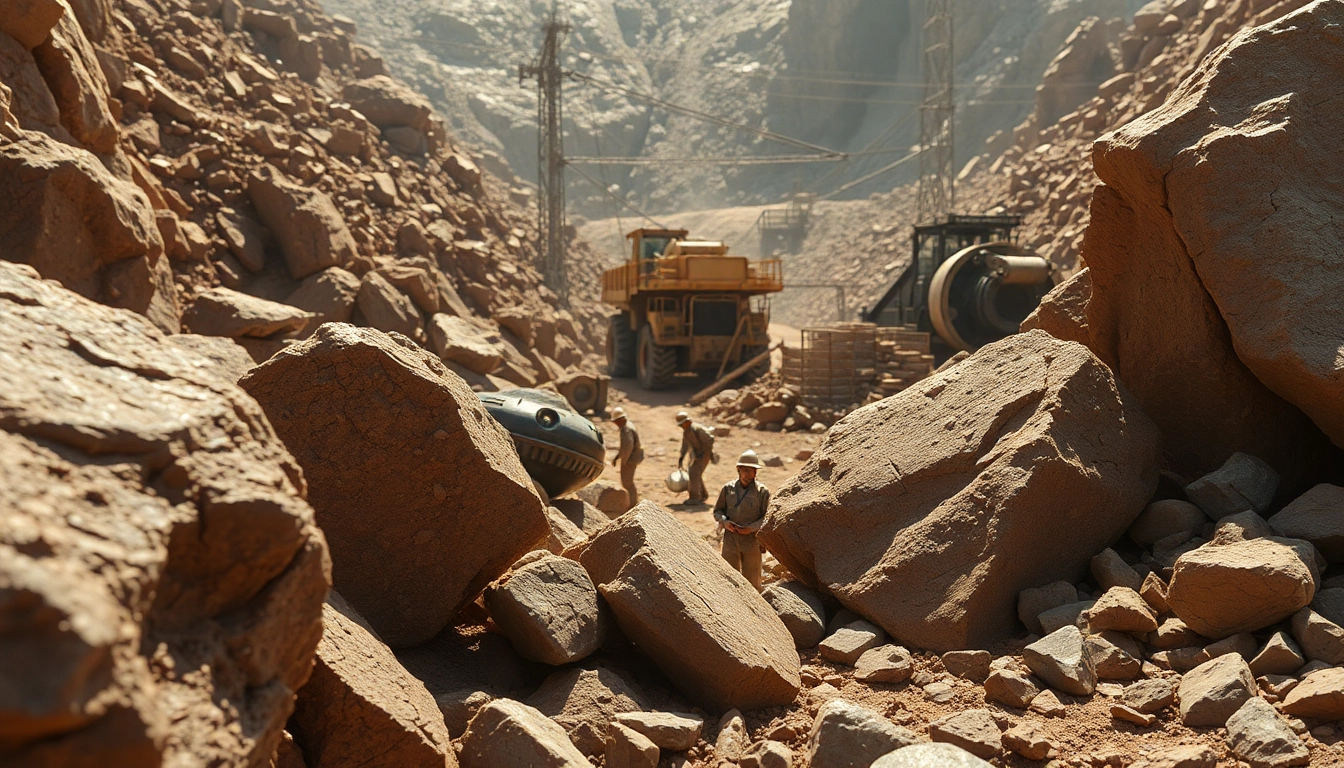
- Open-Pit Mining: A large market-friendly method usually for extracting ores like copper and gold.
- Strip Mining: Involves stripping horizontal layers of soil and rock to reveal horizontal beds of ore.
Surface mining techniques are often more economical and less labor-intensive, making them a popular choice for mining companies.
Underground Mining Processes
For deeper deposits, underground mining is employed. It involves several complex processes:
- Shaft Mining: A vertical tunnel is constructed to access deep ore deposits.
- Room and Pillar Mining: Involves mining in horizontal layers while leaving pillars of ore to support the mine.
This method is sometimes costlier and riskier but is essential for accessing deposits in hard-to-reach locations.
Innovations in Ore Processing
The ore extraction and processing industry is constantly evolving with new technologies aimed at improving efficiency and reducing environmental impacts. Innovations like sensor-based sorting, automated drilling, and advanced metallurgical techniques are transforming traditional practices. Moreover, sustainable practices like reusing water in processing and reducing emissions during extraction are becoming increasingly vital.
Environmental Impact of Ore Mining
Key Environmental Concerns
Ore mining, while economically beneficial, poses significant environmental challenges. The key issues include deforestation, loss of biodiversity, and contamination of water resources. Heavy metals from ore can leach into nearby water bodies, necessitating stringent regulations to ensure environmental safety and sustainable practices in mining operations.
Sustainable Mining Practices
To mitigate environmental impacts, the industry is adopting sustainable mining practices. Some of these practices include:
- Land Rehabilitation: Restoring mined lands to their natural state.
- Water Management: Efficient use of water resources and treatment of wastewater.
- Recycling: Utilizing recycled materials to reduce ore extraction needs.
Sustainability initiatives are crucial for reducing the ecological footprint of ore mining and ensuring compliance with environmental regulations.
Regulatory Framework for Mining
Government regulations play a critical role in controlling mining activities to protect the environment. These regulations may involve obtaining permits, conducting environmental assessments, and adhering to safety standards. Compliance with these frameworks is essential for operations and helps in fostering community trust.
Economic Impact of Ore
Global Market Trends for Ores
The global demand for ores has seen fluctuations based on economic conditions, technological advancements, and geopolitical developments. As industries evolve, so do the sources and methods of ore extraction. For instance, the increasing push towards renewable energy is creating new demands for specific metals used in technologies like solar panels and wind turbines.
Ore Prices: Factors Affecting Value
Ore prices are influenced by several factors, including market demand, supply constraints, mining costs, and geopolitical stability. Prices can vary significantly from one market period to another. Understanding these dynamics is crucial for stakeholders and investors looking to navigate the mining industry successfully.
The Future of Ore Mining
As technology advances and sustainability becomes central to operations, the future of ore mining is rapidly changing. Innovations will likely focus on enhancing extraction efficiency, reducing environmental impact, and improving the economics of mining operations. The integration of AI and data analytics promises to revolutionize the mining sector in terms of safety, efficiency, and cost-effectiveness.
Frequently Asked Questions About Ore
What is the primary use of ores?
Ores are primarily used to extract metals and minerals, which are crucial in industries ranging from construction to electronics.
What are the most common types of ores?
The most common types of ores are metallic ores like iron, copper, and aluminum, and non-metallic ores like limestone and gypsum.
How is ore extracted?
Ore can be extracted through various methods, including surface mining, underground mining, and innovative processing technologies.
What are the environmental impacts of mining ore?
The environmental impacts of mining include habitat destruction, pollution of water sources, and soil degradation, necessitating sustainable practices.
What is the future of mining?
The future of mining will likely focus on sustainability, technological innovation, and the efficient use of resources to meet rising global demands.