When Jenna noticed muddy puddles and brown rings under her sprinkler’s spray, she figured her new sod wasn’t settling—until her neighbor pointed out the obvious: overspray onto the sidewalk and driveway. Jenna has a 40-by-20-foot front yard, a small vegetable patch, and a sunny flower border; she needed a plan that matched each area. This article walks through those exact watering challenges and shows how targeted drip systems reduce waste while keeping every zone healthy.
Problem: Overhead Sprinklers Soak the Wrong Places — Solution: Targeted Drip for Beds and Borders
Many typical lawn sprinklers produce a broad spray that wets sidewalks, drives, and the air—evaporative loss you pay for. For narrow flower beds and borders, that’s especially wasteful because the plant root zone receives only a fraction of the applied water. The fix is simple: switch those zones to a low-pressure, root-zone drip layout that applies water directly to the soil where roots take it up.
Why drip is better for narrow beds
Drip emitters release water at 0.5–2 gallons per hour directly next to plant roots, reducing evaporation and runoff. For example, a 25-foot-long bed with 12-inch emitter spacing uses roughly 6–8 gph total with a low-flow manifold—enough to deeply water roots without wetting walkways. That precision turns what used to be 30–40% wasted water from overspray into useful moisture.
Recommended setup for a typical 25-ft border
- Use 1 GPH emitters spaced 12" apart for annuals, or 2 GPH for thirsty perennials.
- Run a 1/2" drip tubing loop from a modular valve or manual hose connection, keeping runs under 150 feet to maintain pressure.
- Add a pressure regulator (25–30 psi) and a 120-mesh filter to extend emitter life.
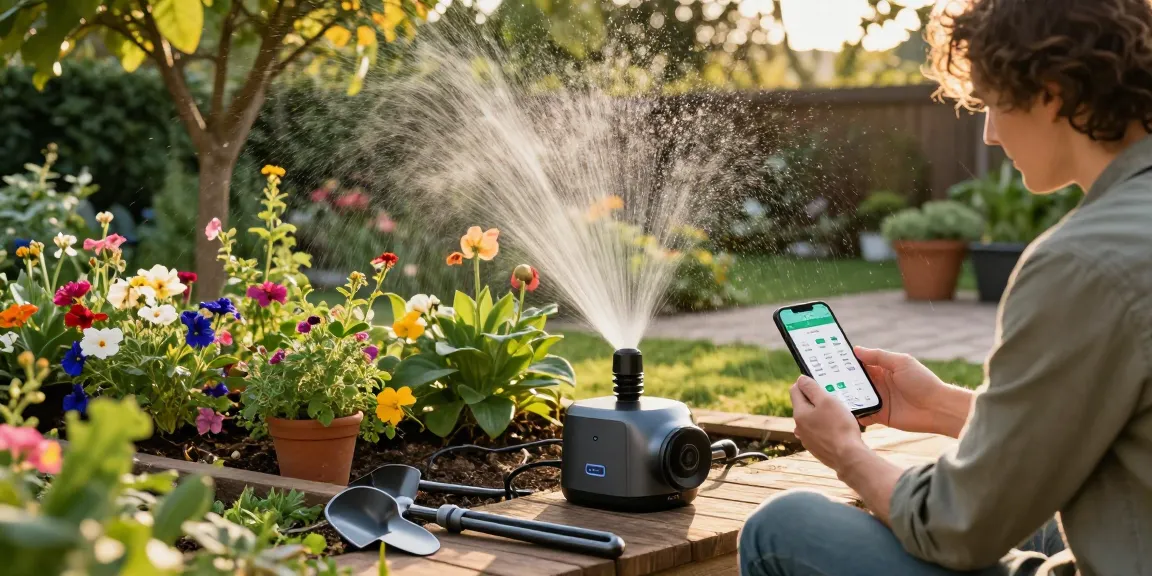
For homeowners who juggle schedules, a WiFi timer such as the RainPoint model lets you run short, targeted cycles during low-evaporation windows (early morning) and skip runs after heavy rain. If you want to read more about the water-saving mechanics of drip systems, click here to learn how drip irrigation reduces water waste.
Problem: Lawns with High Runoff and Deep Roots — Solution: Hybrid Approach with Subsurface Drip or Smart Timers
Large lawns commonly suffer from runoff: heavy application in one go that the soil can’t absorb. If you have clay or compacted soil, deep roots still struggle if watering is shallow. The solution is twofold: reduce single-run durations and use low-flow methods that encourage deeper rooting.
Two practical fixes that work together
First, switch to shorter, repeated cycles—sometimes called “cycle and soak.” For instance, instead of a single 30-minute run, do three 10-minute runs spaced an hour apart; this reduces surface runoff and lets water percolate. Second, consider installing subsurface drip or low-head rotors for large areas. Subsurface drip lines placed 2–4 inches below the surface deliver water directly to root zones and can cut lawn water use by 30–50% compared to spray heads.
MethodTypical Water ReductionBest ForCycle & soak with smart timer15–25%Lawns with runoff or slopesSubsurface drip30–50%High-value turf, compact soilsLow-head rotors20–35%Large open lawns
Smart irrigation controllers can automate the cycle-and-soak strategy and adjust schedules based on weather. According to the EPA, smart irrigation controllers and efficient practices can save homeowners thousands of gallons per year—some estimates top 15,000 gallons annually for an average household using efficient controls and schedules (EPA WaterSense). Linking a controller to local weather and soil-moisture inputs is especially effective.
Problem: Vegetable Beds Need Consistent Moisture — Solution: Dedicated Drip Kits and Pressure-balanced Emitters
Vegetable gardens require consistent, even moisture to prevent blossom end rot, splitting, and stress. Hand-watering or overhead sprays produce uneven moisture and splashing that spreads disease. A dedicated drip kit with uniform-rate emitters gives you gentle, steady delivery that supports yields and reduces waste.
How to size a vegetable drip system
Start by mapping bed length and plant spacing. For a 10x10 raised bed planted in rows, run two parallel drip lines with 8" emitter spacing and 1 GPH emitters. That layout provides continuous coverage and uses roughly 20–30 gallons per hour for the whole bed—spread over repeated short sessions, it’s far less water than daily overhead spray.
- Use inline drip tubing with built-in emitters for neat, uniform output.
- Add a timer and a 1–2 psi pressure regulator designed for low-flow lines.
- Install a simple rain sensor or soil moisture probe to avoid unnecessary runs after rainfall.
Practical example: a home gardener I worked with replaced her overhead hose with a 4-zone drip kit and a budget controller; harvest increased and weekly water use for the veggie patch fell by 40% during summer months. If you want to automate that setup, a WiFi timer from RainPoint can handle staggered schedules and let you water the patch while away.
Problem: Potted Plants and Containers Dry Out Rapidly — Solution: Low-volume, Slow-release Emitters and Soaker Reservoirs
Containers lose water quickly through drainage and surface evaporation. Many homeowners overcompensate with frequent shallow watering—which wastes water and prevents roots from developing. The trick is slow, deep delivery tailored to containers’ small soil volumes.
Container-specific tactics
Use 1/2–1 GPH micro-sprayers or micro-pore emitters per pot; large pots may need two emitters. For hanging baskets, select emitters that clip to the rim and drip into the root ball. Another smart option: install a small soaker reservoir (a bladder or a buried 1-gallon container with a low-flow outlet) that releases water slowly over hours. These setups reduce frequency and deliver water where roots can use it.
Example scenario: a homeowner with 18 balcony pots used a single 12-volt pump with a multi-branch micro-tube layout and a short daily one-hour run; water use dropped by nearly half because the micro-tubes eliminated spillover and long surface evaporation.
Practical Maintenance Tips That Keep Drip Systems Efficient
Even the best drip plan wastes water if it’s not maintained. Here are less-obvious maintenance steps that prevent slow leaks and clogs—small actions that save gallons over the season.
- Flush lines at the start and end of the season. Sediment builds up; a quick flush removes debris before it clogs emitters.
- Install a 120–200 mesh filter where your system taps pressurized water; clean it monthly during heavy use.
- Check emitters for output uniformity: place cups under emitters and run a 5-minute test. Replace emitters that vary more than 10–15% from the mean.
- Protect tubing from sunlight where possible—UV-degraded tubing cracks and leaks. Use black polyethylene lines or cover exposed runs with mulch.
- Seasonal pressure checks: adding or removing zones changes pressure. Use a simple pressure gauge to keep output in the manufacturer’s recommended range (often 10–30 psi depending on components).
Small leaks can bleed several gallons a day unnoticed. One homeowner fixed a cracked quick-connect fitting and stopped a steady 3-gallons/hour leak—a savings of about 90 gallons per month. That kind of routine pays off quickly.
Using the correct watering approach for each area of your yard—mobile sprinklers for a small lawn, smart in-ground systems for large ones, drip for vegetables, soft root-zone watering for flower beds, and steady self-watering for pots—lets you match water delivery to plant needs and drastically reduce waste. If you want a practical starting guide and product pairings that match typical yard situations, see resources from extension services for regional evapotranspiration rates and scheduling tips (e.g., local university extension pages). For a quick how-to on water savings and drip system basics, the EPA WaterSense program is a reliable reference.