

Marble worktops have long been associated with luxury interiors, grand hotels and classic European kitchens. Their distinctive veining and soft, natural sheen create an immediate sense of elegance that few other materials can match. Even with the rise of engineered stones and ultra‑compact surfaces, marble remains the dream choice for many homeowners who want a truly special kitchen. In this article, we will explore what makes marble so desirable, how it compares with other popular worktop materials, and what you should consider before committing to a marble installation.
What Is Marble and Why Is It So Iconic?
Marble is a metamorphic rock formed when limestone is subjected to heat and pressure over long periods of geological time. This process recrystallises the stone and creates the flowing veins and swirls that make marble instantly recognisable. Different quarries around the world produce marbles with their own unique colours and patterns, from soft white and grey Carrara to dramatic black, green or gold‑veined varieties.
The appeal of marble lies not only in its appearance but also in its tactile quality. A polished marble surface feels cool and smooth to the touch, which is one reason it has traditionally been favoured by bakers for pastry work. For homeowners beginning their research into premium worktops, it is helpful to understand how marble sits alongside engineered options by first looking at products such as Quartz Worktops, then comparing those practical benefits with the unique charm of natural stone.
Key Benefits of Marble Worktops
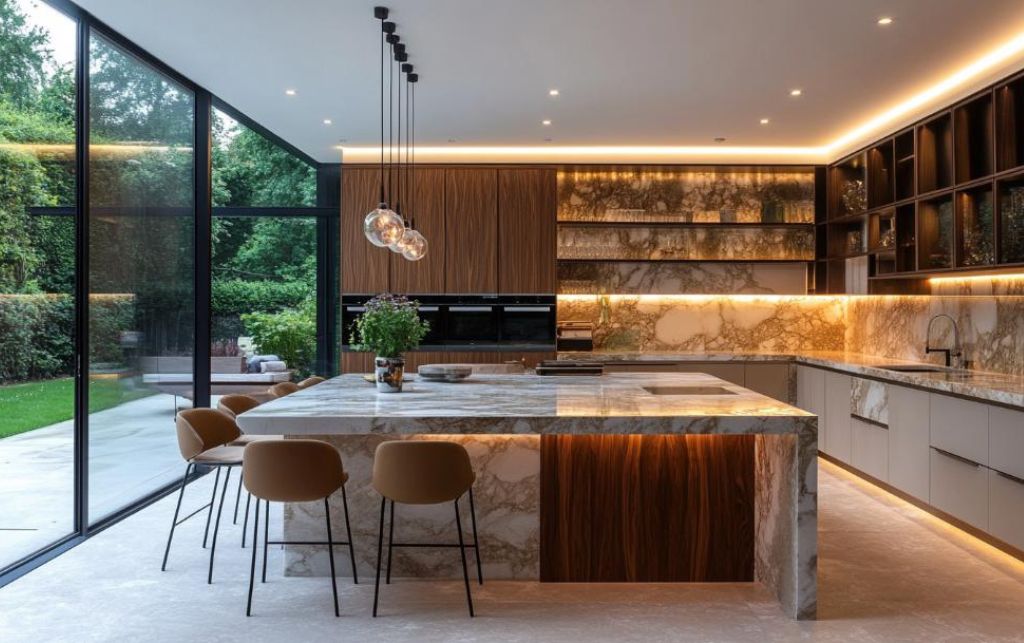
The most obvious benefit of marble Countertop is its visual impact. The veining and colour variation create a sense of movement and depth that can turn a simple kitchen layout into a striking design statement. No two slabs are identical, so a marble worktop gives your kitchen a bespoke, one‑of‑a‑kind feel. This individuality is particularly effective on large islands or long runs of cabinetry where the full pattern of the stone can be appreciated.
Marble also pairs beautifully with a wide range of cabinet styles and colours. It can soften the look of dark, dramatic units or add subtle interest to simple white or neutral schemes. In period properties, marble worktops can echo original architectural details such as fireplaces and window sills, helping the new kitchen feel connected to the rest of the home.
Marble vs Granite Worktops
Marble is often compared with granite because both are natural stones used in high‑end kitchens. However, they behave differently in everyday use. Granite is generally harder and more resistant to scratching and staining, making it a popular choice for busy family homes. Marble, by contrast, is softer and more porous, which means it can scratch, stain and etch more easily if not cared for properly.
For this reason, many homeowners who want the look of natural stone but with a little more robustness start by exploring Granite Worktops Near Me alongside marble options. Seeing full slabs of both materials in person helps you judge how much maintenance you are comfortable with and whether you prefer the speckled patterns of granite or the flowing veins of marble.
Marble Compared with Quartz, Porcelain and Dekton
Engineered materials such as quartz, porcelain and Dekton have become increasingly popular because they offer excellent durability and low maintenance. Quartz is non‑porous and does not usually require sealing, while porcelain and Dekton are ultra‑compact surfaces with exceptional resistance to heat, scratching and UV light. These products can mimic the look of marble very convincingly, which is appealing for homeowners who love the aesthetic but worry about day‑to‑day wear.
However, for some people, only real marble will do. The subtle variations in colour, the way light interacts with the stone and the knowledge that each slab is a natural creation give marble a character that replicas cannot fully replicate. Talking through the pros and cons with experienced Kitchen Worktops Specialists in London can help you decide whether you are happy to accept marble’s quirks in exchange for its beauty, or whether an engineered alternative might be a better fit for your lifestyle.
Where Marble Worktops Work Best
Because marble is more delicate than some other worktop materials, it is often used strategically rather than across every surface in a kitchen. Many designers specify marble for a feature island, baking zone or breakfast bar while using more hard‑wearing materials on the main preparation areas. This approach allows you to enjoy the visual impact of marble without exposing it to the heaviest wear and tear.
Marble also works particularly well in kitchens that are used more for entertaining and light cooking than for intensive daily food preparation. In such spaces, the occasional mark or patina that develops over time can be seen as part of the stone’s evolving character rather than a flaw. If you prefer a pristine, uniform surface at all times, you may find materials like Porcelain Worktops or Dekton Worktops more reassuring.
Design Possibilities with Marble
Marble offers a huge range of design possibilities. Classic white and grey marbles create a light, airy feel and pair beautifully with shaker cabinets, brass hardware and traditional detailing. Darker marbles with bold veining can be used to create dramatic, contemporary schemes, especially when combined with handleless cabinetry and minimal styling. Book‑matched slabs, where two pieces of marble are cut and installed to mirror each other, can form a stunning centrepiece on an island or splashback.
Edge profiles also play a role in the final look. Simple square edges suit modern kitchens, while ogee or bullnose profiles add softness and a more traditional feel. Because marble is softer than granite, intricate edge details are often easier to achieve, giving you more freedom to tailor the worktop to your chosen style.
Planning Marble Worktop Supply and Installation
Successful marble installations start with careful planning. Accurate templating is essential to capture wall irregularities, appliance cut‑outs and any special features such as curves or overhangs. Because marble slabs are heavy and can be more fragile than some engineered materials, access routes need to be checked and installation teams must handle the stone with care.
Many homeowners prefer to work with companies that manage Kitchen Worktops supply, replacement and installation as a complete service. This reduces the risk of miscommunication between different trades and ensures that one specialist is responsible for the entire process, from measuring and fabrication to delivery and final checks. It also makes aftercare simpler, as there is a single point of contact if any questions or issues arise later.
Maintenance and Everyday Care
Looking after marble worktops requires a little more attention than some other materials, but the routine is not complicated. Most suppliers recommend sealing the stone at installation and re‑sealing it periodically, depending on use and the specific type of marble. This helps to reduce the risk of staining from oils, wine, citrus juices and other common kitchen substances.
For daily cleaning, a soft cloth and a mild, pH‑neutral cleaner are usually sufficient. Acidic or abrasive products should be avoided, as they can etch or dull the surface. It is also wise to use chopping boards and trivets to protect the worktop from scratches and heat. Even with these precautions, marble will often develop a gentle patina over time, which many owners come to appreciate as part of its natural story.
Working with Local Marble Specialists
Because marble is a premium, characterful material, choosing the right supplier and installer is crucial. Specialists who regularly work with marble understand how to select suitable slabs, position veining to best effect and handle the stone safely during fabrication and fitting. They can also provide honest advice about where marble will perform well in your kitchen and where a different material might be more practical.
Homeowners in the capital often look for trusted Granite Worktops Near Me and marble suppliers with showrooms where full slabs can be viewed. Seeing large pieces of stone under natural light, rather than relying on small samples, gives you a far better sense of how the veining and colour will appear across your finished worktops.
Is Marble the Right Choice for Your Kitchen?
Whether marble is the best option for your home depends on your priorities and how you use your kitchen. If you value timeless beauty, unique natural patterns and a sense of luxury above all else, marble is hard to beat. It can transform even a simple layout into a sophisticated space and pairs beautifully with a wide range of cabinet styles and finishes.
However, if you prefer a surface that is highly resistant to staining, scratching and etching with minimal maintenance, you may find quartz, porcelain or Dekton more suitable. The key is to compare real samples in your own lighting conditions and to discuss your expectations with an experienced supplier who works with multiple materials. Many homeowners begin by exploring Marble Kitchen Worktops alongside other options so they can make a well‑informed, confident decision.
Marble Worktops for Bathroom Renovation
Marble is not only an outstanding choice for kitchens; it can also elevate any bathroom into a spa‑like retreat. Its natural veining and soft sheen bring a sense of calm luxury to vanity tops, shower surrounds and feature walls, while the cool surface feels refreshing and indulgent in daily use. When properly sealed and maintained, marble performs well in humid environments, offering a durable, easy‑to‑wipe surface that resists everyday splashes and cosmetics. Homeowners planning a full bathroom renovation often choose marble to create a cohesive, high‑end look that ties together floors, countertops and wall cladding, transforming a functional space into a truly relaxing sanctuary.
Final Thoughts
Marble worktops remain one of the most aspirational choices for high‑end kitchens. Their natural veining, soft sheen and unique character create a sense of luxury that is difficult to replicate. With thoughtful design, realistic expectations about maintenance and professional installation, marble can be a rewarding centrepiece that enhances your kitchen for many years. By comparing it honestly with granite, quartz, porcelain and Dekton, and by working closely with knowledgeable specialists, you can decide whether this classic stone is the right foundation for your next kitchen project.