
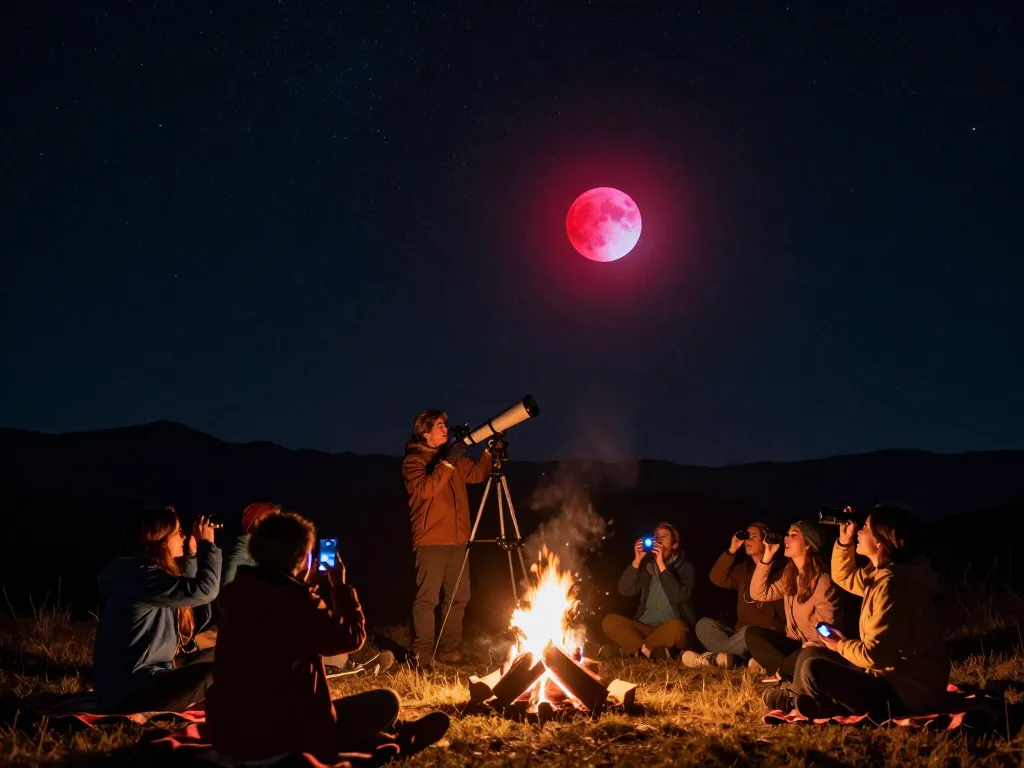
Understanding the Total Lunar Eclipse
A total lunar eclipse is one of the most dramatic celestial events, offering a rare opportunity for stargazers and astronomy enthusiasts alike to witness an astounding transformation of the Moon. During this phenomenon, the Earth positions itself directly between the Sun and the Moon, allowing the Earth’s shadow to fully obscure the Moon’s surface. As a result, the Moon takes on a striking reddish hue, often referred to as a “blood moon.” To explore the intricacies of this phenomenon, understanding the mechanics and timing becomes essential, especially as the next total lunar eclipse is set for March 2026, making it an exciting event on the astronomical calendar. For more information, you can visit this resource on the Total lunar eclipse.
What Is a Total Lunar Eclipse?
A total lunar eclipse occurs when the Moon completely traverses the Earth’s umbral shadow. This alignment takes place only during a full moon phase, where the Sun, Earth, and Moon are nearly in a straight line. The event is characterized by a noticeable darkening of the Moon as it enters the shadow, followed by a gradual transition into shades of red and orange due to Rayleigh scattering of sunlight through the Earth’s atmosphere. This scattering is similar to the phenomenon that creates red sunrises and sunsets.
The Science Behind the Blood Moon
The term “blood moon” is derived from the striking appearance of the lunar surface during a total lunar eclipse. When the Moon enters the Earth’s shadow, some sunlight filters through the atmosphere and refracts around the Earth, casting a reddish shadow on the Moon. The degree of redness can vary depending on atmospheric conditions at the time; for instance, volcanic activity or pollution can make the Moon appear even redder. The scientific understanding of this phenomenon allows not only for awe-inspiring visuals but also provides insights into atmospheric conditions.
When Does a Total Lunar Eclipse Occur?
Total lunar eclipses are not frequent occurrences; they typically happen about once every 2.5 years. However, they can occur in clusters, with multiple eclipses happening in short succession. The next total lunar eclipse, slated for March 3, 2026, will be visible in regions including Australia, Asia, and the Americas. Observers should take note of local timings, as these can vary significantly depending on geographic location.
History and Cultural Significance
Historical References to Lunar Eclipses
Throughout history, lunar eclipses have been viewed with a mixture of awe and trepidation. Ancient civilizations often interpreted these events as omens, predicting everything from natural disasters to shifts in leadership. For example, the early Mesopotamians meticulously recorded lunar eclipses and developed a system of calculations that allowed them to predict future occurrences. In the context of cultural development, these interpretations played a significant role in the advancement of early astronomy.
Folklore and Myths Surrounding the Blood Moon
Folklore often reflects humanity’s relationship with celestial events. Many cultures have woven myths around the blood moon; for example, ancient North American tribes viewed it as a harbinger of a great change or misfortune. In contemporary times, some believe blood moons carry unique spiritual significance, claiming they herald transformations or shifts in consciousness. These stories enrich the tapestry of human experience, connecting us with the cosmos in ways that are both profound and personal.
Modern Celebrations and Events
In modern times, total lunar eclipses have become occasions for communal viewing events, often organized by astronomy clubs or science centers. These gatherings offer not only an opportunity to observe the eclipse but also to engage in educational discussions regarding lunar phases, celestial mechanics, and the science behind eclipses. Notable public events, such as “moon watches,” encourage participation and foster a collective appreciation for astronomical phenomena.
How to Prepare for Viewing
Essential Equipment for Observing
While the good news is that lunar eclipses can be viewed with the naked eye, having some equipment can enhance the experience. A pair of binoculars or a small telescope can provide a closer look at the Moon’s surface features and the changes occurring during the eclipse. Additionally, a stable tripod can help stabilize cameras for capturing breathtaking photographs of the event.
Best Locations for Observation
Choosing the right location for viewing a total lunar eclipse is crucial. Ideally, observers should seek out areas with minimal light pollution, such as parks or rural settings away from city lights. An unobstructed horizon enhances the viewing experience, allowing one to take in the entire event from beginning to end. It’s also essential to check the weather forecast to ensure clear skies on the night of the eclipse.
Weather Considerations and Timing
Weather can significantly impact the visibility of a lunar eclipse. Clear skies are ideal; thus, it’s advisable to monitor local forecasts leading up to the event. Timing is also critical, as each eclipse progresses through several phases, including partial and total eclipses. Knowing the exact timings for your location allows for optimal viewing and ensures that you don’t miss the stunning transition to the blood moon.
What to Expect During the Event
Phases of a Total Lunar Eclipse
A total lunar eclipse occurs in distinguished phases: the penumbral phase, partial phase, and totality. During the penumbral phase, the Moon passes through the Earth’s outer shadow and may be subtly shaded. This is followed by the partial phase, where a portion of the Moon enters the umbra, leading to a noticeable darkening. Finally, totality is reached when the entire Moon is engulfed by Earth’s umbra, often showcasing a vivid red color.
The Visual Experience: Colors and Changes
The visual palette of a total lunar eclipse can be stunning. Through the various phases, the Moon may display shades of gray, orange, or deep red. The intensity and hue are influenced by the Earth’s atmosphere and environmental conditions at the time. For photographers, capturing the event can be challenging yet rewarding, requiring careful attention to settings and angles to showcase the interplay of light and shadow.
Capturing the Event with Photography
Astrophotography during a total lunar eclipse can yield impressive results, but it requires planning. A DSLR or mirrorless camera with a telephoto lens is ideal for capturing details of the Moon. Time-lapse photography can illustrate the dynamic progression of the eclipse, while thoughtful composition can enhance the overall impact of the captured images. Focusing on techniques such as long exposure can also provide breathtaking results.
Future of Lunar Eclipses: What to Anticipate
Upcoming Total Lunar Eclipses in 2026 and Beyond
Following the total lunar eclipse in March 2026, enthusiasts can look forward to another occurrence on December 31, 2028. Each event presents a unique opportunity for observation, and keeping track of these dates allows enthusiasts to stay connected with celestial movements. As we advance into the future, the cycle of lunar eclipses will continue to unfold, enriching our understanding of astronomy.
Technological Advances in Astrophotography
With advancements in technology, capturing lunar eclipses has become increasingly accessible. Modern camera systems equipped with better sensors and smart features allow for clearer and more detailed images. Additionally, mobile applications and software facilitate tracking celestial events, providing notifications and calculations that enhance the overall experience for amateur astronomers.
Predictions for Lunar Eclipse Events
The study of celestial mechanics enables astronomers to predict future lunar eclipses with remarkable precision. Models based on the Moon’s orbit and Earth’s movements reveal the timing and visibility of these events well in advance, aiding enthusiasts in planning their observation. Each eclipse serves as a reminder of the beauty and complexity of our universe, inspiring continued exploration and study.
FAQs
What is the significance of the total lunar eclipse?
The total lunar eclipse holds scientific and cultural significance, serving as a reminder of the interplay between celestial bodies. It captivates viewers with its stunning beauty while also providing insights into atmospheric conditions and lunar surface features.
How often does a total lunar eclipse occur?
Total lunar eclipses occur approximately every 2.5 years, with specific patterns that lead to clusters of eclipses in certain periods. Observers should keep an eye on astronomical calendars for upcoming events.
Where will the next total lunar eclipse be visible?
The next total lunar eclipse on March 3, 2026, will be visible in regions across Australia, Asia, and the Americas, making it a widely accessible event for observers worldwide.
What causes the moon to appear red?
The Moon appears red during a total lunar eclipse due to Rayleigh scattering of sunlight as it passes through the Earth’s atmosphere, filtering out shorter wavelengths of light and allowing longer wavelengths to reach the Moon.
How do I view a lunar eclipse safely?
Unlike solar eclipses, viewing a lunar eclipse does not require special glasses, making it safe to observe with the naked eye. However, using binoculars or a telescope can enhance the viewing experience.